

This is the final article in my Longevity House series. Part 1 was about designing a home that encourages movement. Part 2 was about creating a healthier environment. This final article is about something I didn’t fully appreciate until we moved in: how a home can either create stress or quietly remove it.
When people think about longevity, they usually think about exercise. Or nutrition. Or sleep.
Those are all important. But over the past year I’ve become increasingly interested in something much harder to measure.
Mental energy.
Not the kind of stress caused by major life events. The smaller, quieter kind. Looking for your keys. Worrying whether one of the kids has lost theirs. Unloading the dishwasher. Folding laundry. Deciding where something belongs.
None of these things matters much on its own. But together they create hundreds of tiny moments of friction every week.
So during the renovation, we kept asking a question that had nothing to do with interior design:
“How can this house ask less of us?”
Five decisions made the biggest difference. Starting at the front door.
1. The Front Door Recognises Us
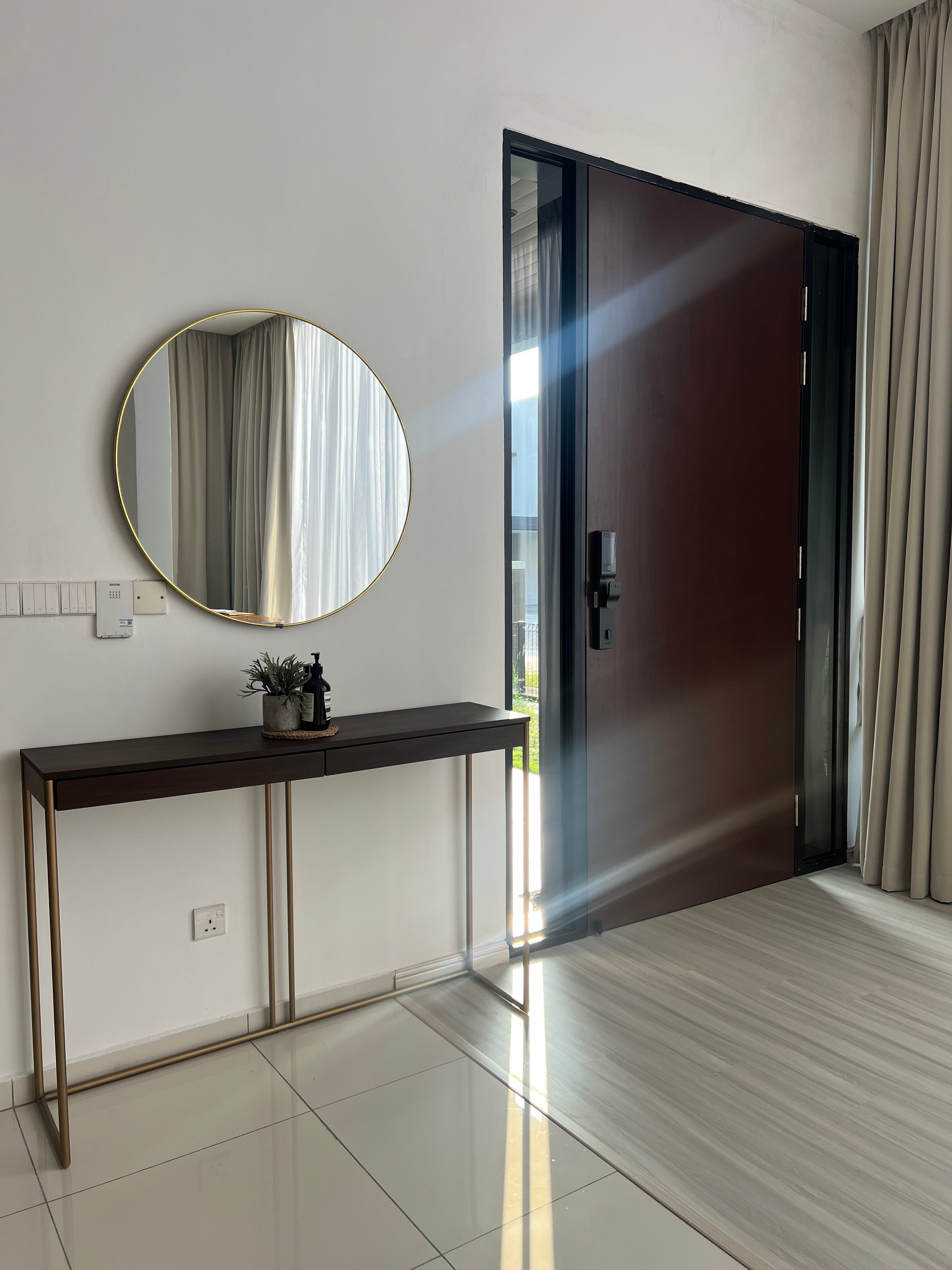
This is probably my favourite feature in the entire house.
Instead of using keys, our front door unlocks with palm recognition. You walk up, hold out your hand and the door opens.
It sounds like a small thing. But it’s an interaction you repeat every single day.
The kids don’t lose keys. Nobody stands outside wondering who has the spare. After a while, you stop thinking about it entirely.
Which is exactly the point. Good design removes problems before they become problems.
Takeaway: The best conveniences are the ones you stop noticing.
2. Two Dishwashers Eliminated One Household Chore
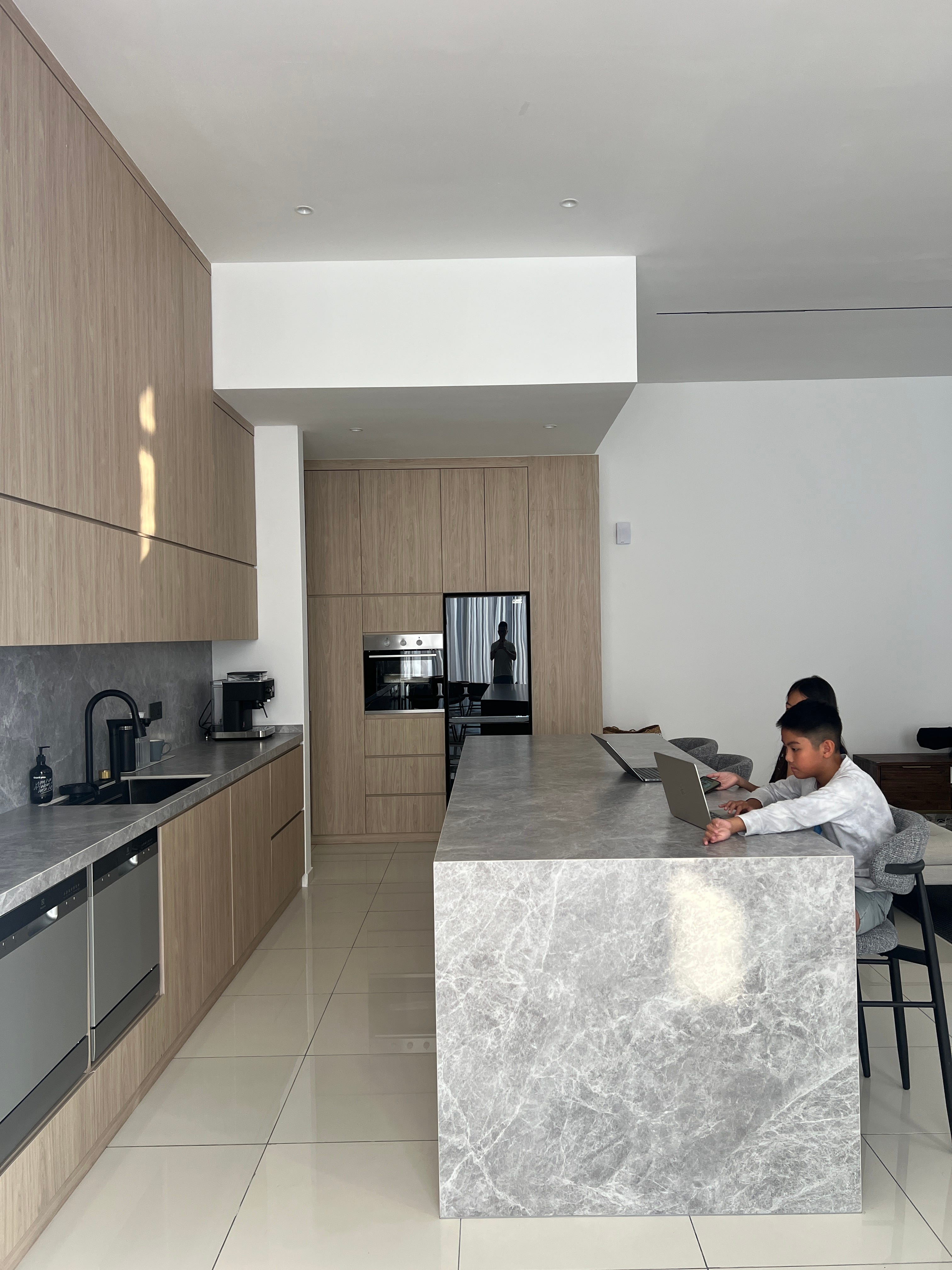
Whenever people visit, this is the feature that surprises them most.
“Why would you need two dishwashers?”
The answer is that we don’t. We need one less household chore.
One dishwasher stores the clean dishes. The other collects the dirty ones. When the second one is full, we run it and swap them over.
That’s it. We’ve almost eliminated the task of unloading dishes into cupboards.
Does it save a lot of time? Not really. Maybe a few minutes a day. But that was never the point. What we’ve removed is a repetitive task we’d otherwise perform almost every day for the next twenty or thirty years.
Some people optimise for minutes. We were optimising for mental load.
Takeaway: The goal isn’t to save time. It’s to reduce the number of decisions your home asks you to make.
3. We Swapped a Live-In Helper for Part-Time Cleaners
For many years we had a live-in helper. She was wonderful, especially while the kids were younger.
As the children became more independent, though, we realised something. We didn’t just have a helper. We had another household to manage.
Schedules. Leave. Healthcare. Accommodation. The countless little decisions that come with another person living under your roof.
Eventually we switched to part-time cleaners. They clean the house. They fold the laundry. Then they head home.
We still get almost all of the benefit of a clean home, with a fraction of the mental overhead.
Takeaway: Sometimes the simplest life isn’t the one with the most help. It’s the one with the least complexity.
4. Two Fridges, Two Different Jobs
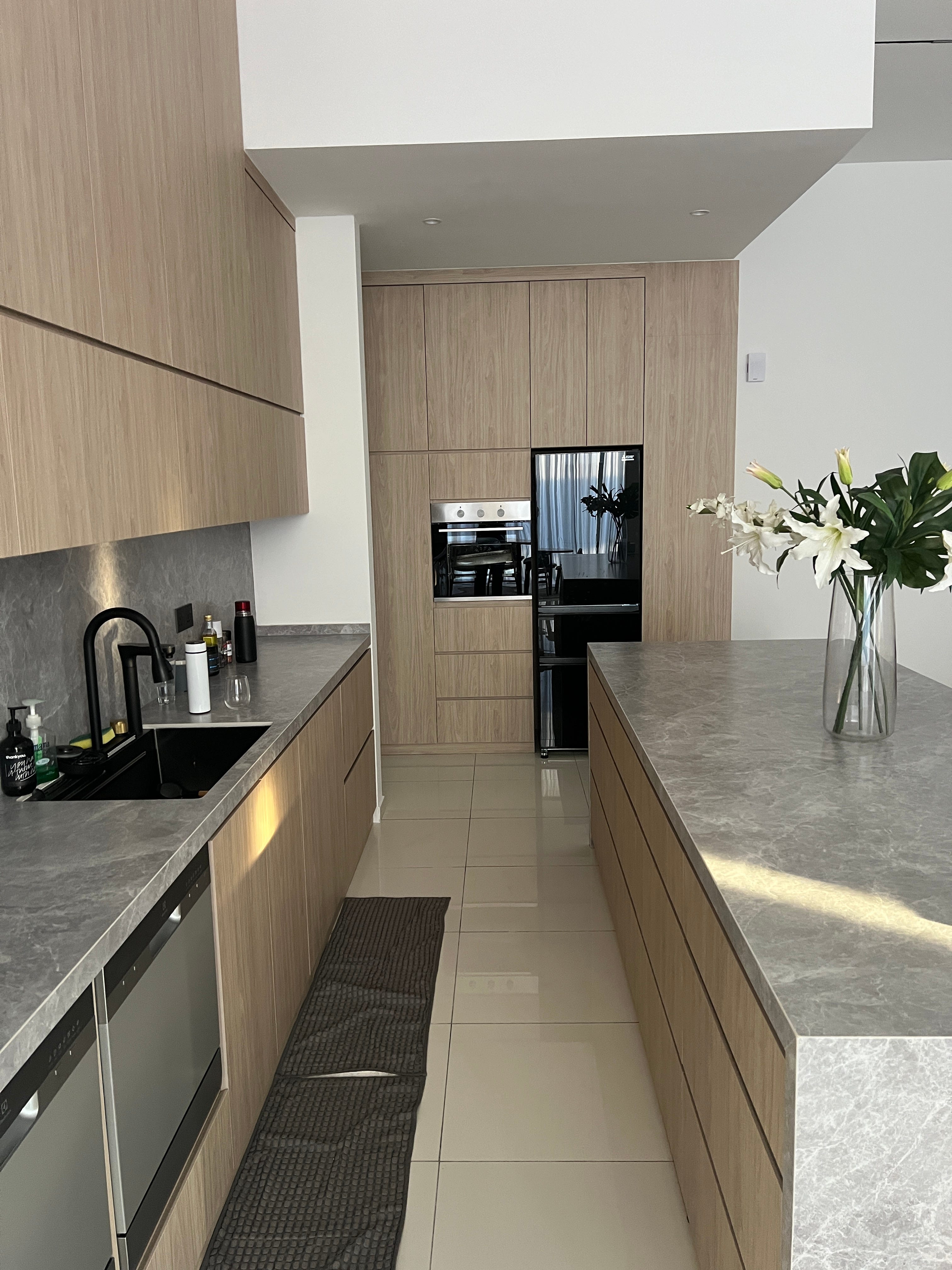
One thing we planned particularly carefully: two refrigerators.
The fridge in the dry kitchen stores food that’s ready to eat. Fruit. Greek yoghurt. Kimchi. Drinks. Ice cream. The things people reach for throughout the day.
The fridge in the wet kitchen stores raw ingredients waiting to be cooked.
It’s a surprisingly small change. But because everything has a logical place, the kitchen simply feels easier to use. Nobody wonders where something belongs.
Good organisation doesn’t just save time. It reduces thinking.
Takeaway: A place for everything means less time deciding where everything goes.
5. We Optimised for a Home That’s Easy to Maintain
One thing we kept coming back to during the renovation was a simple question:
“Will this create work for us in the future?”
That question influenced more decisions than I expected.
It’s why we didn’t build a private swimming pool.
It’s why we chose an under-sink water filtration system instead of another appliance sitting on the kitchen bench.
It’s why we preferred solutions that quietly looked after themselves instead of demanding our attention.
I’ve realised that every feature you add to a house has a maintenance cost.
Sometimes it’s money.
Sometimes it’s time.
Very often, it’s mental energy.
If we weren’t convinced something would improve our lives every day, we usually left it out.
Takeaway: Every feature has a maintenance cost. Choose carefully.
Final Thoughts
Looking back, this was the biggest surprise of the entire renovation.
We often think of longevity as adding things to our lives. Another supplement. Another workout. Another health habit.
This renovation taught me that longevity can also come from subtraction. Removing unnecessary decisions. Removing repetitive chores. Removing the tiny moments of friction that quietly drain your energy every day.
None of the ideas in this article is particularly dramatic. A different front door. Two dishwashers. Part-time cleaners. Better organisation.
Individually, they don’t change much. Together, they’ve created a home that simply feels calmer. It asks less of us. And that leaves a little more energy for the things that matter.
That’s the end of the tour. A house that nudges us to move, an environment our bodies quietly benefit from, and a home that asks less of us every day.
If you take one idea from this series, make it this:
Design your environment, and it will design your habits.